A Walking Meditation for Wherever You Are

By Robert Stewart
Step away from the activity in your world and enjoy a walking meditation led by Robert Stewart. You can experience this in a park, on a trail, or on a quiet patch of land. If the situation calls for it, you can even sit in one place and let your imagination lead you on this walk.
Startle and Center

By George Leonard
In turbulent times, we may often find ourselves unbalanced and uncentered. ITP co-founder George Leonard shared a practice he called Startle and Center. He encouraged us to consider a startling event as a catalyst for becoming more balanced and centered than before. This activity can be practiced with a friend, family member, or practice group.

The Power of Community in Uncertain Times

By Eric Benson
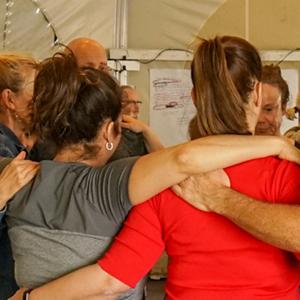
Personal transformations don’t have to be isolated. In fact, there is power in community practice. ITP practitioner Eric Benson talks about the doors that open when you share space with others on the same path.

ITP Community Spotlight on Tess Gannon

By Tess Gannon, Sally Isaacs
It takes a strong foundation to build an effective organization. That’s where Tess Gannon comes in. She recently stepped into the role of executive and administrative assistant at ITPI. As she supports the plans and programs, she is meeting a personal goal of leaving a positive impact on the planet.

ITP Community Spotlight: Christina Grote and Pam Kramer

By Christina Grote, Pam Kramer, Sally Isaacs
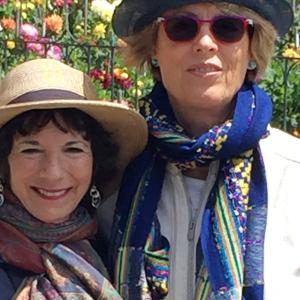
Christina Grote and Pam Kramer are co-authors of Living an Extraordinary Life, an extensive and valuable book whose creation must have taken tremendous focus and energy. What motivated them to write this great book? And how does their ITP practice help them be so productive while staying balanced, vital, and healthy? The interview is conducted by ITP newsletter coordinator Sally Isaacs.

Standing Relaxation Led by sensei Teja Bell

By Teja Bell
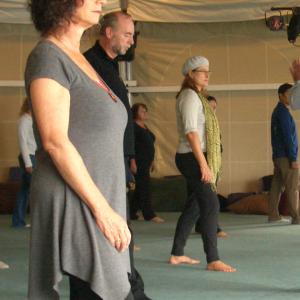
During an enlivening Seekers & Sages session with senseis Teja Bell and Bob Noha, Teja led a simple embodied practice of standing energetic relaxation. The practices discussed in the session offer a glimpse of how “simplicity opens to depth,” resulting in a fuller flow of energy throughout the body and being.

The Kata Led by George Leonard

By George Leonard
George Leonard first proposed ITP, a practice that is still evolving. He borrowed the word Kata from the Japanese word for “form.” The series of exercises comprising the Kata is a perfect microcosm of integral practice itself as it involves all parts of our being—body, mind, heart, and soul. It is extraordinarily well‐designed, containing elements of hatha yoga, Aikido, stretching, progressive relaxation, transformational imaging, and meditation. The Kata has roots in the science of exercise physiology and is informed by works such as The Relaxation Response by Herbert Benson, MD. This video treats us to George Leonard leading a Kata class while sharing his wisdom.

The Nourishing Power of Community

By Christina Grote, Pam Kramer
George Leonard modeled ITP partly on the structure of Dean Ornish’s program for reversing heart disease, in which he participated. The program included group support as well as diet and exercise, and that community element was found to be a very important factor in the success of the program. The same is true for ITP.

Rest and Relaxation

By Christina Grote, Pam Kramer, George Leonard
In our efforts to be healthy, research – as well as common sense – tells us the importance of rest and relaxation. The ITP Kata treats us to the practice of “progressive relaxation” and its benefits to body, mind, heart, and soul.

Conscious Eating

By Christina Grote, Pam Kramer
As with exercise, you may already have a well‐established and healthy set of eating habits, in which case you may simply choose to experiment with bringing more mindfulness to your eating. ITP’s fourth core practice intention sounds simple: “I am conscious of everything I eat and drink.” There is no dietary advice here – no “good” foods and “bad” foods, rule, or restrictions – just a recommendation to be aware of everything that you are putting in your mouth. Well, there’s a little more to it, but that is the basic idea.